OPERATING MODEL
How most retail inventory systems work — and why fresh
food is different
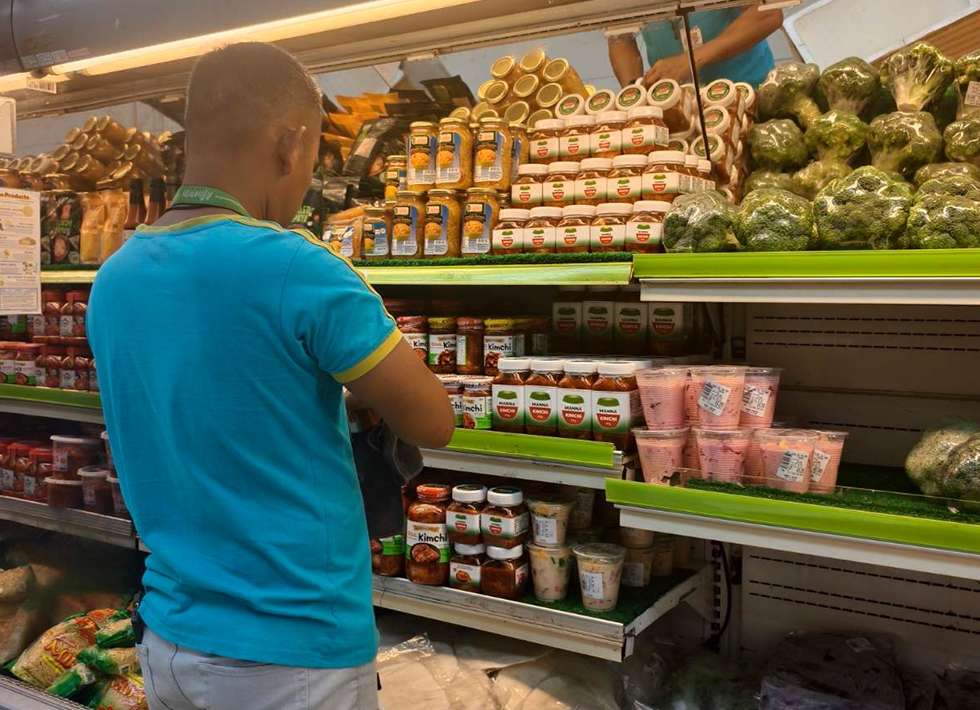
Most retail inventory management runs on ERP platforms that track what has already been sold. Replenishment decisions are triggered when stock falls below a defined threshold — a system designed to prevent stockouts, not to minimize disposal.
For ambient or shelf-stable products, this works adequately. For fresh food with a defined consumption window, it does not.
By the time an ERP system signals a replenishment need, the problem has already occurred. Overstock accumulates. Product ages past its optimal window. Disposal follows.
Large retailers know this. Many have invested in more sophisticated forecasting layers on top of their ERP systems. But the gap between system output and field execution remains — because the system operates from headquarters, and the shelf is in the store. The decision still happens at a desk, hours or days after the shelf condition changed.
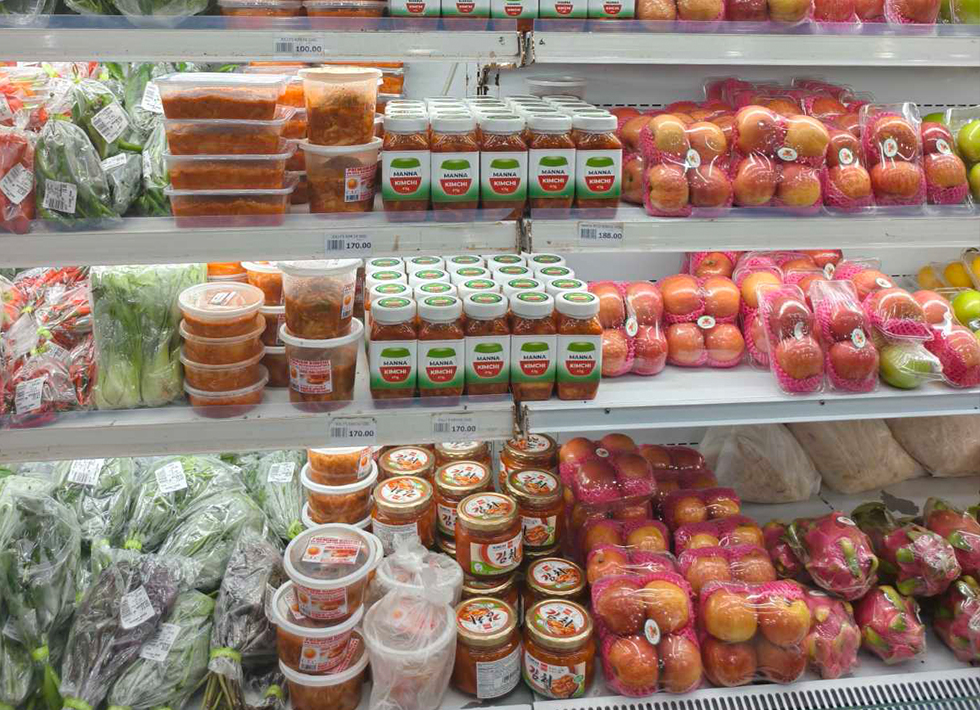
By the time an ERP system signals a replenishment need, the problem has already occurred. Overstock accumulates. Product ages past its optimal window. Disposal follows.
Large retailers know this. Many have invested in more sophisticated forecasting layers on top of their ERP systems. But the gap between system output and field execution remains — because the system operates from headquarters, and the shelf is in the store. The decision still happens at a desk, hours or days after the shelf condition changed.
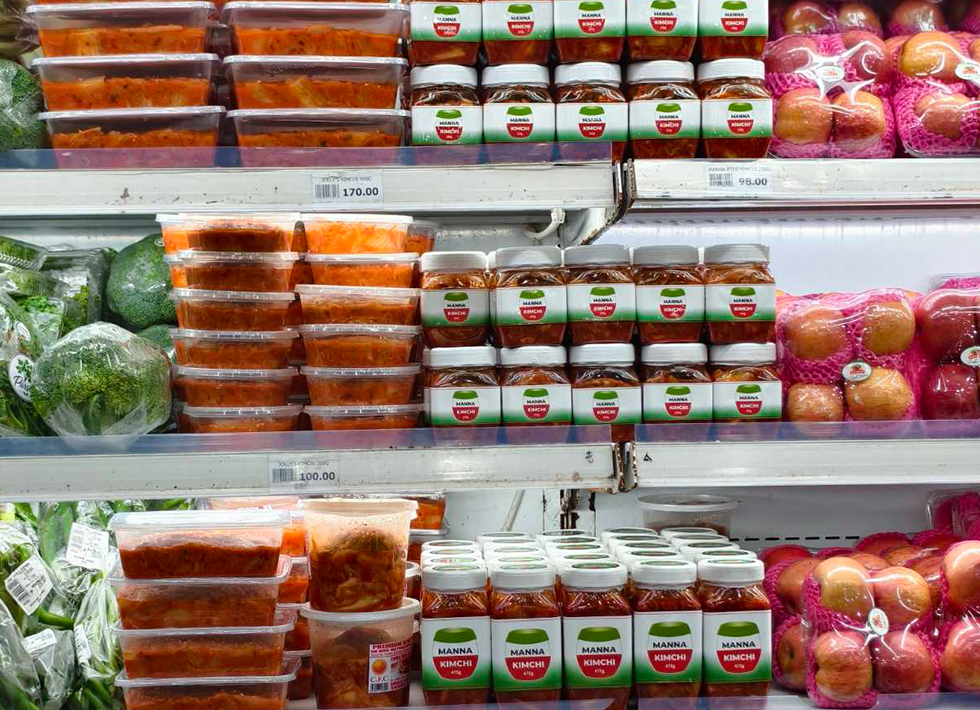
In most supply arrangements — whether consignment or direct purchase — the party managing the shelf and the party bearing the cost of unsold inventory are different. Retailers prefer consignment to transfer inventory risk. Suppliers prefer direct purchase to avoid it.
We operate on consignment — by choice. Because we manage the shelf ourselves, the risk stays with us and so does the control. The result is no stockouts from delayed purchase orders, and no disposal from unmanaged inventory.
What we built instead
Our PSQ-DSA-PRQ system operates at the point of execution, not from a central office. Every variable — current shelf inventory, actual sales velocity, days remaining in the consumption window — is measured and applied at the moment of each delivery, by the team making the delivery. No lag between data and action. No translation from system to field. No disposal budget. The party managing the shelf and the party bearing the cost are the same. That alignment is what makes the system work. This is not a software advantage. It is a structural one. That is the difference between a tracking system and an execution system.
DTS Model Overview

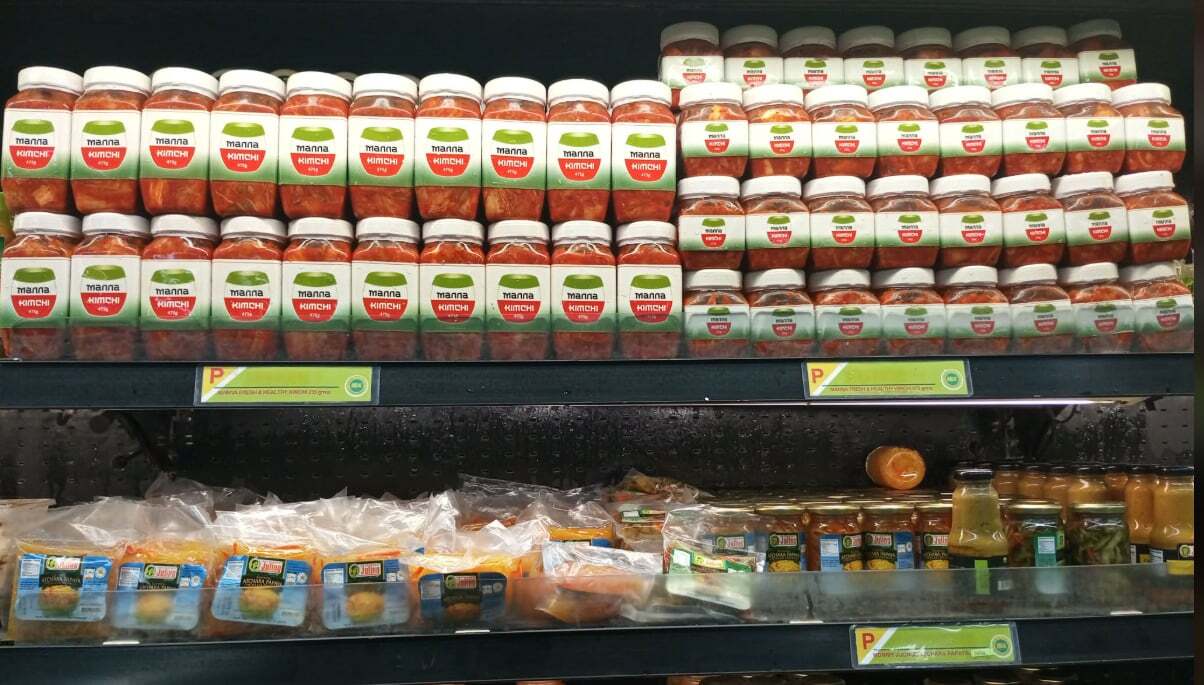
We operate a Direct-to-Store distribution model in which every unit produced at our Davao facility is delivered by our dedicated team directly to the retail display.
This structure was not inherited from industry convention. It was designed from the ground up to maintain product quality at every point between production and consumer purchase.
Building this model required sustained operational discipline at every level. The system holds only when execution standards are applied consistently and without exception — a discipline that requires constant monitoring to maintain at every level of the supply chain. Without third-party logistics, without distribution center routing, and without unmonitored storage at store level.
PSQ System
At the core of our operating model is the PSQ — developed to achieve two goals that can work
against each other: maximum sales with minimum disposal.
PSQ is calculated as follows:
Daily Sales Average (DSA)
DSA measures each store’s average daily sales velocity. DSA is currently tracked on a rolling basis and is being developed toward a multi-period moving average framework — comparing 1-week, 2-week, 1-month, and 3-month periods simultaneously for more precise trend detection.
PSQ formula
- Weekly delivery stores: DSA x 7 days + 3-day buffer
- Twice-weekly delivery stores: DSA x 4 days (weekday) or 3 days (weekend) + 2-day buffer
End-of-Cycle Estimated Quantity (PRQ)
PRQ projects the quantity expected to remain on the shelf at the time of the next delivery.
Outgoing quantity: PSQ – PRQ
PSQ is adjusted continuously. The ability to maintain accurate PSQ adjustment over time — across all stores, every cycle — is what determines the system’s value. When PSQ adjustment discipline breaks down, the entire system becomes difficult to sustain.
Store-Level Execution
Each delivery to a retail store follows a defined execution sequence:

Shelf inventory counted and recorded at point of arrival

Actual sales confirmed against previous cycle’s PSQ ending balance

Delivery quantity per store confirmed: PSQ – PRQ

New stock placed behind existing inventory (FIFO enforced)

Full quantity placed directly on shelf — back-room storage prohibited
Store display and replenishment are executed entirely by our team. We do not rely on store staff for restocking or display management.
Factory outgoing quantity is calculated separately as the sum of all store PSQ minus the sum of all store PRQ, plus a 20% operational buffer — covering demand variance and contingency requirements across the full delivery cycle.
The same framework applies regardless of product category — the underlying logic of PSQ is not specific to kimchi.
DSA & PRQ
DSA — Daily Sales Average
DSA measures each store’s average daily sales velocity and forms the foundation of PSQ calculation. It is currently tracked on a rolling basis and is being developed toward a multi-period moving average framework for more precise trend detection across 1-week, 2-week, 1-month, and 3-month periods.
PRQ — End-of-Cycle Estimated Quantity
PRQ projects the remaining shelf quantity at the time of the next delivery based on current stock and DSA. PRQ feeds directly into PSQ calculation — PSQ minus PRQ determines the actual outgoing quantity for each store on each delivery cycle.
System Outcomes
The following outcomes are a direct result of the PSQ-DSA-PRQ framework applied consistently across our distribution network:
-
- Disposal rate: under 1% — precise production and disposal figures available to qualified partners upon request
- Out-of-stock incidents: minimized through PRQ-based forward projection
- Delivery schedule adherence: maintained across 400+ stores
- Product freshness at point of sale: protected through production-date tracking and FIFO enforcement
For your store, this means one thing: no disposal loss, no stockout loss, and no shelf management overhead — without giving up margin.
These outcomes are a function of the system — not the product. The same operational results are achievable for any refrigerated or time-sensitive product category managed within this framework.
We are open to conversations with partners who see what this system could become — beyond Manna, beyond kimchi, beyond the Philippines.
MANNA KOREAN
FNB CORP.
Quicklinks
Hours
Monday – Saturday
8:00am – 5:00pm
Sunday: Closed
Address
CONTACT
(082) 308 4074
09209009777
09177009777
mannakoreanfnb@gmail.com
Newsletter

© 2026 Manna Korean FNB Corp. All rights reserved.